Standing Seam Metal Roofing in Georgetown, TX
Standing seam is the premium metal roof: interlocking panels with hidden fasteners and no exposed screws to leak. It's the longest-lasting, best-looking metal system we install in Georgetown, giving 40 to 70 years of life with a Class 4 hail rating, and it typically runs $14 to $26 per square foot installed. If your address sits in the Old Town or Downtown Overlay, read the Certificate of Appropriateness section before you commit to it.
What is a standing seam metal roof?
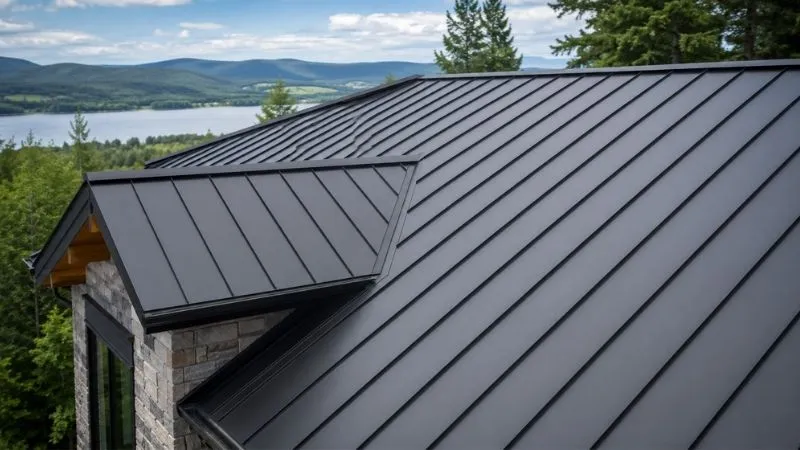
A standing seam roof is made of long metal panels that lock together at raised, vertical seams. The fasteners that hold it down are hidden underneath those seams, so there are no screws penetrating the surface of your roof, and no screw holes to leak over time. That's the key difference from cheaper exposed-fastener panels, and it's why standing seam lasts so much longer.
Why is standing seam the top choice in Central Texas?
Because it's built for our weather and our sun. Standing seam earns the highest Class 4 impact rating, so it stands up to the hail that regularly hits the Austin area. With no exposed fasteners, there's nothing to back out or leak, and floating clips let the panels expand and contract through 100-degree temperature swings without buckling. Most standing seam roofs last 50 to 70 years, two to three times longer than asphalt shingles, which is why so many homeowners call it the last roof they'll ever buy.
Can I put standing seam on a house in Old Town Georgetown?
Maybe, and this is the one question about standing seam that is genuinely different in Georgetown than anywhere else in the metro. If your address falls inside the Old Town Overlay or the Downtown Overlay, the City's own roofing page says you may need a Certificate of Appropriateness before you change roof materials.
“If your address is in the Old Town Overlay or Downtown Overlay, you may need a Certificate of Appropriateness if you are changing materials.”
City of Georgetown, Roofing Permits page
A Certificate of Appropriateness is issued either by the City's Historic Preservation Officer or by the Historic and Architectural Review Commission, known as HARC, and it is judged against the Downtown and Old Town Design Guidelines and the Unified Development Code. Going from composition shingle to standing seam is a change of material, so it is exactly the kind of project that triggers the review.
What that means in practice, plainly stated:
- It is a review, not a ban. Standing seam metal is historically appropriate on a great many Central Texas building types. Plenty of the older roofs around the square were metal originally.
- It adds time. Plan the COA before the $60 re-roof permit, which itself runs 10 to 15 business days or longer.
- Profile and finish matter more than usual. A narrow-pan, low-profile seam in a muted color reads very differently to a review body than a wide-rib panel in a bright finish.
- Ask first. The City's Downtown and Historic Planner takes questions at historic@georgetowntexas.gov or (512) 930-3575.
We will not tell you a COA is guaranteed, because it is not ours to guarantee. What we will do is check whether your address is in an overlay before we quote, so you find out now rather than after you have signed something.
Source: City of Georgetown, Roofing Permits and Historic Preservation pages, accessed July 2026. Confirm current requirements with the City before relying on them.
What about my HOA?
Outside the historic overlays, the question is usually the HOA rather than the City, and Sun City is where it comes up most. Texas Property Code section 202.011 limits how far a homeowners association can go in banning roofing materials. Passed as House Bill 362 in 2011, it bars an association from prohibiting shingles that are wind and hail resistant, more energy efficient, or solar capable, provided they resemble the shingles otherwise allowed in the subdivision, are more durable and equal or better in quality, and match the surrounding aesthetics.
Here is the part most roofing sites skip. The statute says shingles. That is a clean fit for Class 4 impact-resistant shingles, and a defensible one for stone-coated steel and metal shingles, which are shingle-profile products. Applying it to standing seam, which is a standing-rib panel system and looks nothing like a shingle, is a stretch. We are not going to tell you section 202.011 forces your HOA to approve standing seam, because we do not think it does. If your HOA is the obstacle, stone-coated steel is usually the better argument and often the better-looking answer anyway.
Texas Property Code section 202.011, added by Acts 2011, 82nd Legislature, Regular Session, Chapter 939 (House Bill 362), effective 17 June 2011. This is general information, not legal advice. Read your own deed restrictions.
How much does a standing seam roof cost in Georgetown?
Standing seam typically runs $14 to $26 per square foot installed in Central Texas, or roughly $28,000 to $52,000 on a 2,000-square-foot home, depending on the metal, the gauge, and how complex your roof is. It costs more than other metal systems, but its longer life and lower maintenance often make it the better value over time. See the full Georgetown cost guide.
What materials and colors can I choose?
Most Georgetown homes use Galvalume steel, but there are a few options depending on your budget and the look you're after:
| Material | Installed cost | Lifespan | Best for |
|---|---|---|---|
| Galvalume steel | $14–$20 / sq ft | 40–60 yrs | The Central Texas default. Its aluminum-zinc coating resists corrosion. |
| Kynar (PVDF) painted steel | $16–$22 / sq ft | 40–60 yrs | 20+ fade-resistant colors with a long paint warranty. |
| Aluminum | $16–$24 / sq ft | 50–70 yrs | Won’t rust, even at cut edges. Lighter on the structure. |
| Copper | $30–$50+ / sq ft | 100+ yrs | Premium and architectural; develops a natural patina. |
A Kynar (PVDF) paint finish gives you 20-plus colors that won't chalk or fade for decades, and a reflective "cool" color can help cut your summer cooling bills. We'll bring samples so you can see the options against your home.
Snap-lock vs. mechanically seamed: what's the difference?
Both hide their fasteners; the difference is how the seams close. Snap-lock panels click together by hand and work well on standard residential pitches, and they're faster and a bit less expensive. Mechanically seamed panels are crimped closed with a special tool for the tightest possible weather seal, which is what you want on low-slope roofs. We'll recommend the right one for your roof's pitch.
What does a proper standing seam installation include?
- Full tear-off and inspection of the decking underneath
- High-temp underlayment: standard felt degrades under metal in Texas heat
- Floating clips so panels can expand and contract without stress cracks
- Proper flashing at valleys, chimneys, skylights, and walls
- Ridge, eave, and trim details finished to the manufacturer's spec
- Written warranty: both manufacturer material and workmanship
If a quote comes in far below the ranges above, ask what's being left out. A common shortcut is exposed-fastener panel sold as "standing seam," or skipping the high-temp underlayment.
Standing seam FAQs
How long does a standing seam metal roof last?
Does standing seam dent in hail?
Is a standing seam roof loud in the rain?
Can you put solar panels on a standing seam roof?
Ready for a straight answer on your roof?
Call for a free inspection. We'll take a look, walk you through your options, and there's no pressure either way.
Call (737) 320-3400